
Classroom air quality: how schools add UV-C without a construction project
Classrooms pack 25–30 occupants into a small air volume for hours at a stretch, often in buildings whose mechanical systems were designed decades ago. Districts rarely have the budget or the summer window for an HVAC overhaul — which is why the lighting grid has become the practical path to better classroom air.
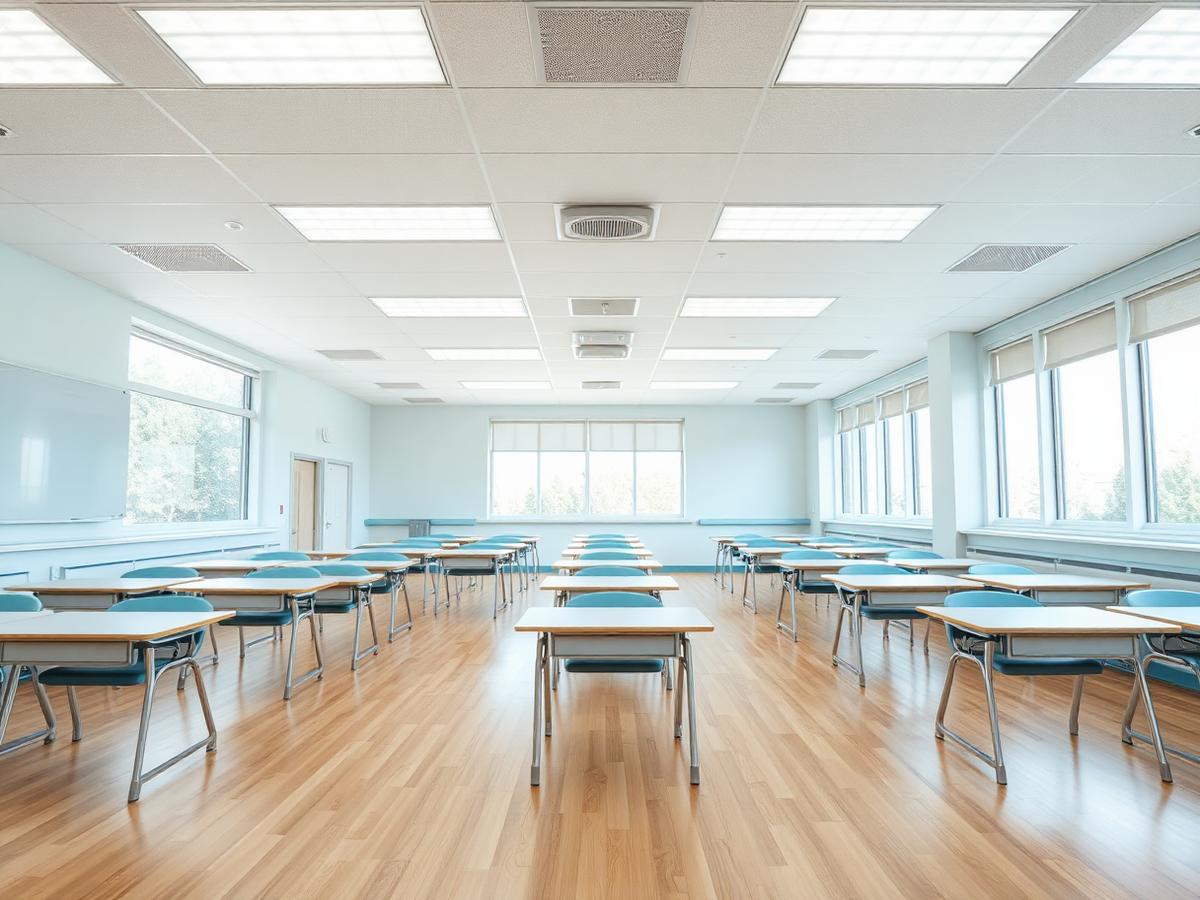
Why the ceiling grid is the cheapest path to more air changes
Nearly every classroom already has 2′×4′ lay-in troffers on a standard grid. Swapping those fixtures for UV-C air-cleaning troffers adds air treatment in the same openings, on the same circuits, with no ductwork and no floor space lost to portable units.
Portable HEPA units are the usual alternative. They work, but they occupy floor area, add audible noise at the volume needed for a classroom, and create a recurring filter-replacement line item plus a place where captured organisms accumulate.
What coverage looks like in a typical classroom
A standard 900 sq ft classroom sits comfortably in the range where existing troffer positions already approximate the fixture count needed for 4–6 air changes per hour — roughly one fixture per 100 sq ft, adjusted for occupancy and ceiling height.
Because air treatment rides along with the lights, it runs during every class period without a teacher having to switch anything on. Motion-sensor auto-on and scheduling keep the fixtures aligned to the school day.
Scheduling a rollout around the school calendar
Fixture swaps are electrical work measured in minutes per room, not days. Districts typically phase by building and use existing breaks.
- Pilot one wing or grade band to establish a baseline and build board support
- Batch remaining classrooms into a summer or winter-break window
- Do corridors and cafeterias with linear or sconce fixtures where there is no grid
- Leave nurse suites and special-education rooms on the priority list, not the leftovers
Making the case to a board or a funding committee
The argument that lands is usually attendance and continuity rather than technology. Illness-driven absence costs instructional days for students and substitute coverage for the district, and it hits the same buildings every year.
Pair that with the operational story: no filters to buy, no floor units to store, LED downlighting that replaces aging fixtures anyway, and a maintenance-indicator light so custodial staff know when service is due.
Key takeaways
- The existing 2×4 troffer grid is the lowest-friction place to add classroom air treatment.
- One fixture per ~100 sq ft targets 4–6 ACH in a standard classroom.
- Swaps are minutes per room, so rollouts fit existing school breaks.
- No filters, no floor units, and the lighting upgrade comes with it.
K-12 Classroom Air Quality Guide
A one-page district guide: coverage per classroom, rollout scheduling around school breaks, and the talking points that carry a board vote.
- Fixture-count worksheet by classroom size
- Phased rollout calendar template
- Board-presentation talking points on absence and continuity
- UV-C troffers vs. portable HEPA cost-of-ownership comparison
Frequently asked questions
Is UV-C safe in a classroom full of students?
Yes. The UV-C LEDs are enclosed inside a sealed chamber within the fixture, so no germicidal light reaches students or staff. Only treated air is returned to the room, which is why the system can run all day with the classroom occupied.
How many UV-C fixtures does a classroom need?
Plan on roughly one fixture per 100 sq ft, then adjust for occupancy density and ceiling height. Most standard classrooms are already close, because the existing troffer count was set by lighting requirements in a similar range.
Is this quieter than portable HEPA purifiers?
The fans are quiet, adjustable-speed units sized to the room and mounted in the ceiling rather than at desk level, so they avoid the localized noise that makes floor-standing purifiers get switched off.