
STEP 01
Intake
Quiet, adjustable-speed fans built into each fixture continuously draw room air into a sealed internal chamber. No ducting, no external units — it uses the ceiling grid you already have.
Peel open the ceiling and here's what happens every second the room is occupied: red contaminated air pulled up, purple UV-C LEDs blast it, clean blue air returned. Silently, continuously.
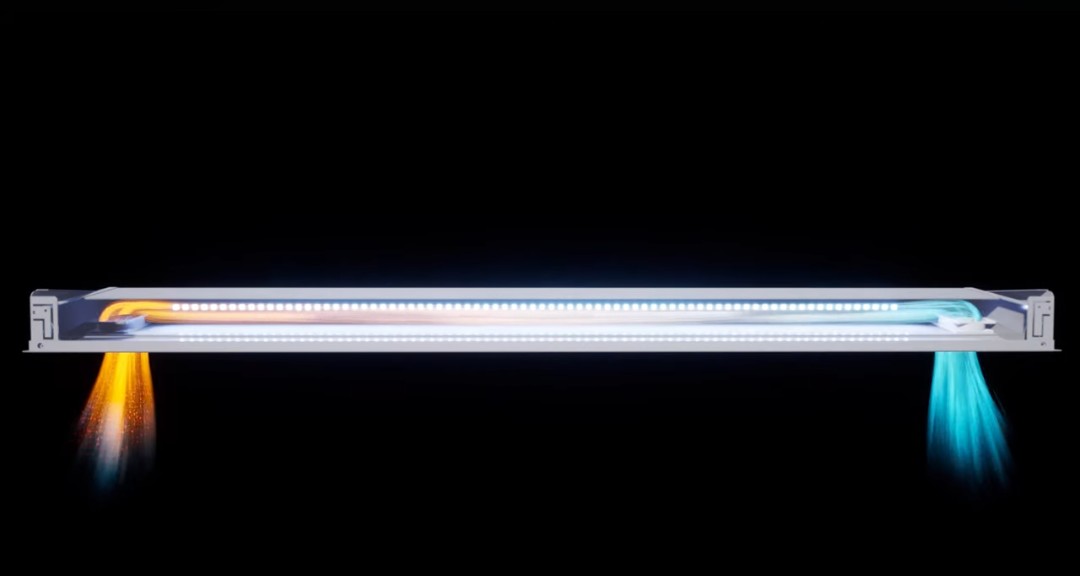
Quiet, adjustable-speed fans built into each fixture continuously draw room air into a sealed internal chamber. No ducting, no external units — it uses the ceiling grid you already have.
Inside the chamber, air passes across an array of 275 nm UV-C LED chips. 275 nm is the peak germicidal wavelength, and the chamber is fully enclosed so no UV light ever leaves the fixture.
UV-C energy damages the RNA/DNA of airborne viruses, bacteria, mold, and fungal spores. Damaged pathogens can't replicate — so they can't spread or infect.
The purified air exits the fixture and returns to the room. With correctly-sized fixtures, all of a room's air is exchanged multiple times per hour, continuously, 24/7.
Pick a category to see how 275 nm UV-C interacts with different airborne threats — and the dose it takes to inactivate them.
At 275 nm, UV-C photons are absorbed by the nucleic acids inside airborne viruses, forming pyrimidine dimers that break the genome. A virus that can't replicate can't infect — even if it still reaches a host.
*Third-party university lab testing. Real-world reduction depends on fixture density, room volume, and airflow.
HVAC systems run when they need to heat or cool, not to actually clean air. Between cycles, air stagnates — and viruses can linger for hours.
HEPA and MERV filters capture particles, but the virus itself is still there. Filters can re-release pathogens or continue to shed them into circulation.
Germicidal UV-C light has been used for disinfection in hospitals, water treatment, and labs for over a century. Its effectiveness on airborne pathogens is well documented.
Upper-room UV systems and mobile UV robots expose people to UV directly, so they typically run only when rooms are empty. Our chamber is sealed — safe for continuous, occupied use.
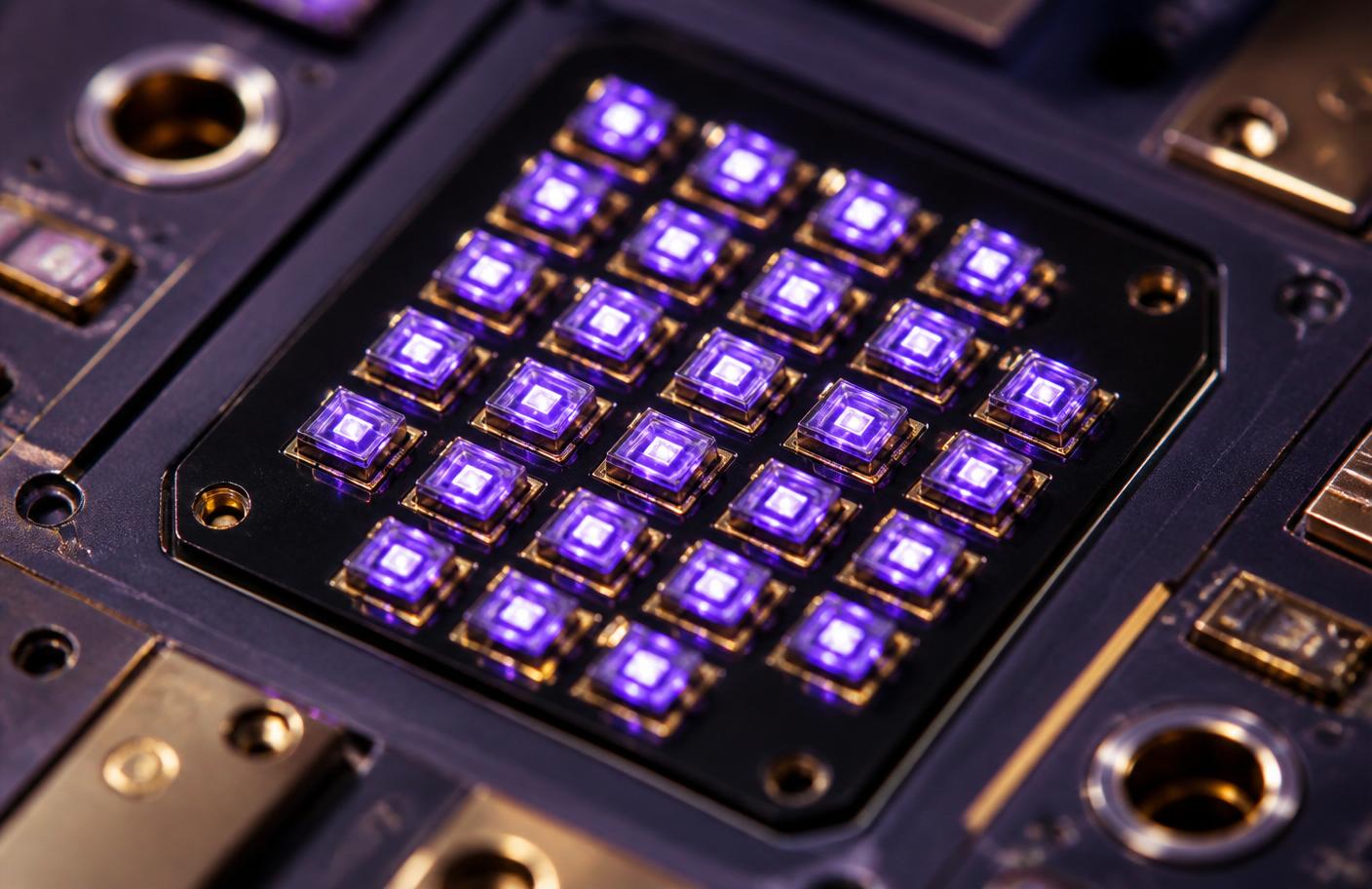
Traditional germicidal systems use mercury-vapor UV bulbs that emit a variable wavelength and need replacement every 9–12 months. UV-C LED chips emit a stable, specific 275 nm output for a rated lifetime measured in years — cutting maintenance, downtime, and lifecycle cost. Every fixture in the Confidence LED™ UV-C lighting product line uses the same 275 nm chips, from 2′x4′ troffers to over-bed units.