Hospital-grade air disinfection that never asks the room to be empty.
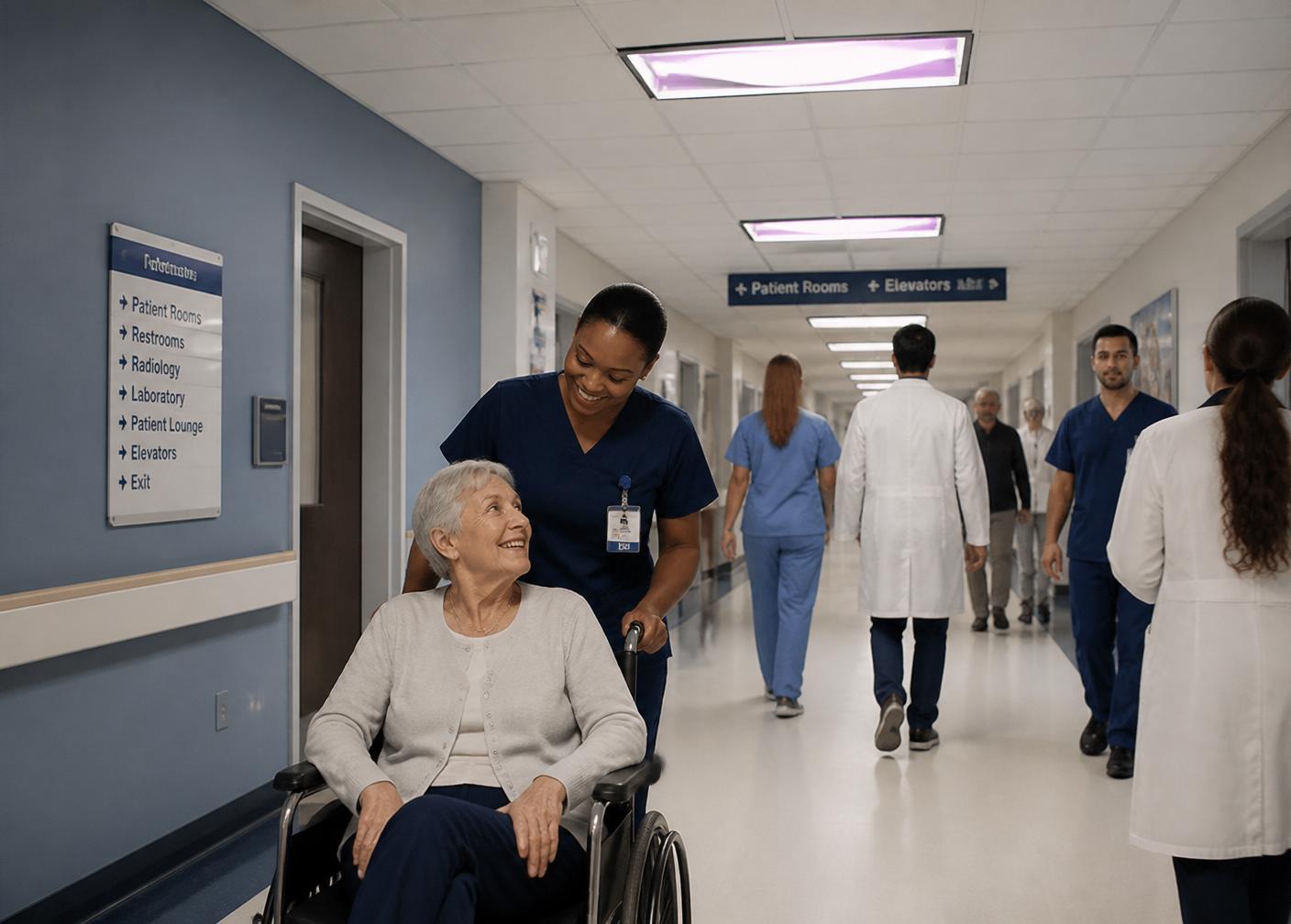
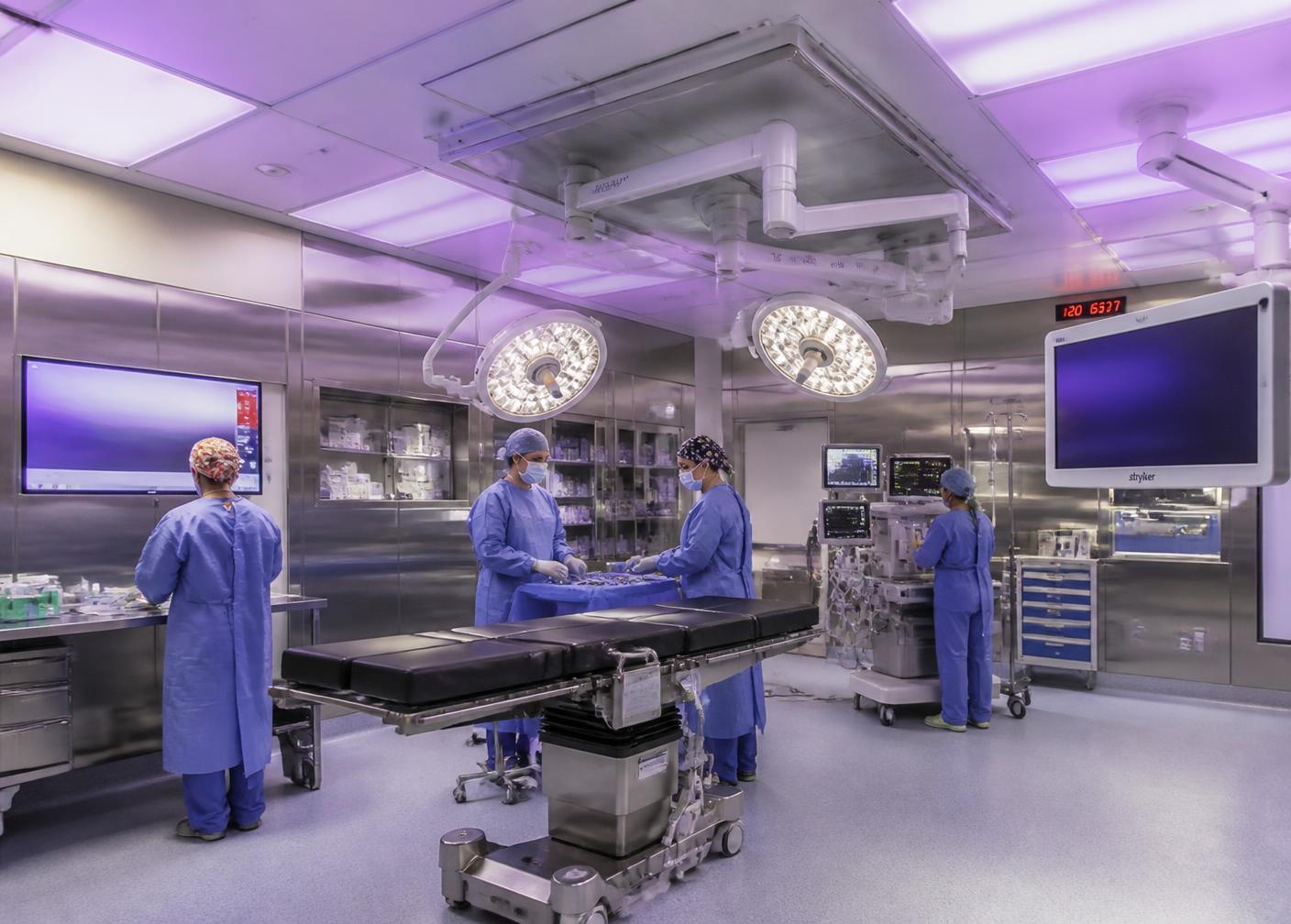
Patient rooms, emergency departments, waiting areas, and pre-op bays hold the densest concentration of infectious aerosols in any building. Confidence LED™ fixtures drop into the ceiling grid you already have and run 24/7 — inactivating airborne viruses, bacteria, and fungal spores in a sealed 275 nm UV-C chamber while clinicians and patients stay in the room.
Learn how UV-C LED lighting inactivates airborne viruses and bacteria at 275 nm, or compare UV-C troffers, linear fixtures, and over-bed units in the Confidence LED™ family.
Airborne CFU in monitored patient rooms
Added air changes per hour, per room
Runtime with occupants present
What makes hospitals & health systems different.
Airborne pathogen load between HVAC cycles
Central air handling exchanges room air on a building schedule, not a clinical one. In-room UV-C adds 4–6 additional air changes per hour exactly where the pathogens are generated.
HAI and staff-exposure pressure
Healthcare-associated infections and staff sick days both trace back to shared indoor air. Continuous inactivation reduces the airborne share of that risk without adding a single workflow step.
No floor space, no downtime
Portable HEPA carts consume floor space and get unplugged. UV robots require an empty room. Our fixtures live in the ceiling and replace existing troffers during normal maintenance windows.
Room-by-room coverage.
Patient rooms & ICU bays
2'x4' and 2'x2' troffers plus over-bed units for high-acuity rooms.
Emergency & waiting areas
High-throughput, unscreened populations sharing one air volume for hours.
Pre-op, PACU & anterooms
Sterile-adjacent spaces where portable equipment isn't welcome.
Staff lounges & nurse stations
Where clinicians unmask and spend their longest continuous shifts.
Hospitals questions, answered.
Is UV-C safe for patients and staff in an occupied hospital room?
Yes. All UV-C LEDs are sealed inside an internal chamber. No UV light ever exits the fixture or contacts skin or eyes. Only the standard white downlight is visible in the room.
Does UV-C kill COVID-19 and other airborne viruses?
UV-C in the 275 nm germicidal range damages the RNA and DNA of airborne pathogens — including SARS-CoV-2, influenza, RSV, tuberculosis bacteria, and mold spores — so they can no longer replicate or infect.
How does this compare to HEPA filtration?
HEPA traps particles in a filter that must be changed and can harbor viable organisms. UV-C inactivates pathogens as air passes through the chamber. Many hospitals run both; our fixtures add disinfection without adding floor units.
Can these retrofit into an existing hospital ceiling grid?
Yes. Fixtures match standard 2'x4' and 2'x2' troffer dimensions and install like any lighting replacement — typically a few minutes per fixture, unit by unit, with no construction.
What maintenance do the fixtures require?
Long-life UV-C LEDs plus a maintenance-indicator light that signals when service is due. Facilities teams handle it on the same rounds as lighting.
Explore more industries.
Dental & Medical Offices
UV-C LED ceiling fixtures for dental operatories and medical exam rooms — clear aerosols between patients with no downtime, no floor units, and no visible UV light.
UV-C air disinfection for dental & medicalSchools & Universities
UV-C LED classroom lighting that continuously disinfects air in K-12 schools and universities — reduce absenteeism and airborne illness without disrupting the school day.
UV-C air disinfection for schoolsSenior & Assisted Living
Continuous UV-C LED air disinfection for assisted living, memory care, and skilled nursing — protect the most vulnerable residents in occupied rooms, 24/7.
UV-C air disinfection for assisted livingGet a room-by-room fixture plan for your facility.
Tell us your square footage and room types and we'll map coverage — no obligation.