
Assisted living air disinfection: protecting the most vulnerable residents
Assisted living communities combine the two conditions that drive respiratory outbreaks: the most vulnerable population and shared indoor air for nearly every waking hour. Most communities have thorough surface and kitchen sanitation programs — and nothing at all for the air.
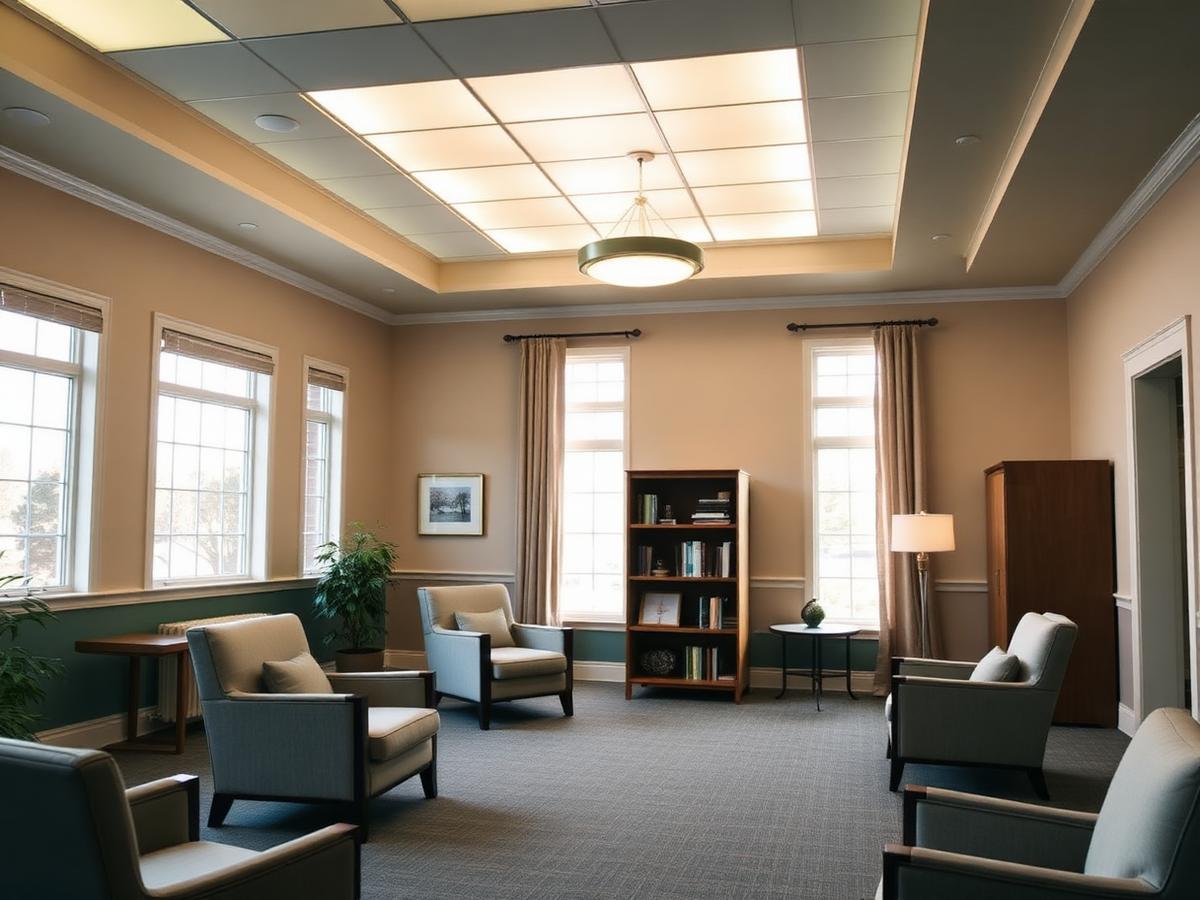
Where outbreaks actually spread
Congregate dining rooms and activity spaces put dozens of residents in one air volume for an hour or more at a time, several times a day. Memory care wings add residents who cannot reliably mask or distance. Resident bedrooms then host eight or more hours of continuous overnight exposure.
Treating those three space types covers most of the day's shared-air exposure, which is why they usually come first in a phased plan.
Overnight operation in sleeping rooms
Air treatment only helps if it is left on. In sleeping rooms that means fan noise and light have to be manageable: fan speed is adjustable per room, and the downlight dims independently of the air-cleaning function, so disinfection continues at night with the light off.
Over-bed units place the intake closest to the resident's breathing zone, which is the highest-value position in a single-occupancy room.
Planning for outbreak season
Respiratory season is predictable, and installation is not the thing you want to be scheduling during it. Communities that plan well install in the shoulder months and use the season to document what changed.
- Phase one: dining, activity rooms, memory care common areas
- Phase two: resident rooms, starting with the highest-acuity hall
- Phase three: corridors, entry lobbies, and staff break rooms
- Brief families in plain language — 'continuous air cleaning, no UV exposure to residents'
Operational fit for a small maintenance team
Senior living maintenance staffs are small, so anything with a monthly consumable tends to lapse. Sealed-chamber LED fixtures have no filters to change, LEDs rated in years rather than months, and a maintenance-indicator light that tells staff when service is actually due.
Key takeaways
- Dining, activity, and memory care common areas carry the most shared-air exposure per day.
- Over-bed units target the breathing zone and can run quietly overnight.
- Install in shoulder months so coverage is in place before respiratory season.
- No filter consumables keeps the system running with a small maintenance team.
Assisted Living Air Disinfection Guide
A one-page community guide: phased room priorities, overnight operation settings, and family-facing language for outbreak season.
- Three-phase room priority plan
- Overnight operation checklist for resident rooms
- Family and staff communication language
- Outbreak-season installation timeline
Frequently asked questions
Can UV-C fixtures run overnight in a resident's room?
Yes. The UV-C chamber is sealed, fan speed is adjustable, and the light dims independently of air cleaning — so the fixture keeps treating air 24/7 without disturbing sleep.
Is UV-C safe around residents with dementia?
There is nothing for a resident to operate, reach, or misuse: the germicidal LEDs are enclosed inside the fixture housing, mounted in the ceiling or on the wall, and no UV light exits the unit.
Which rooms should a community do first?
Start with congregate dining and activity rooms, then memory care common areas, then resident bedrooms beginning with the highest-acuity hall. Corridors and staff break rooms follow.